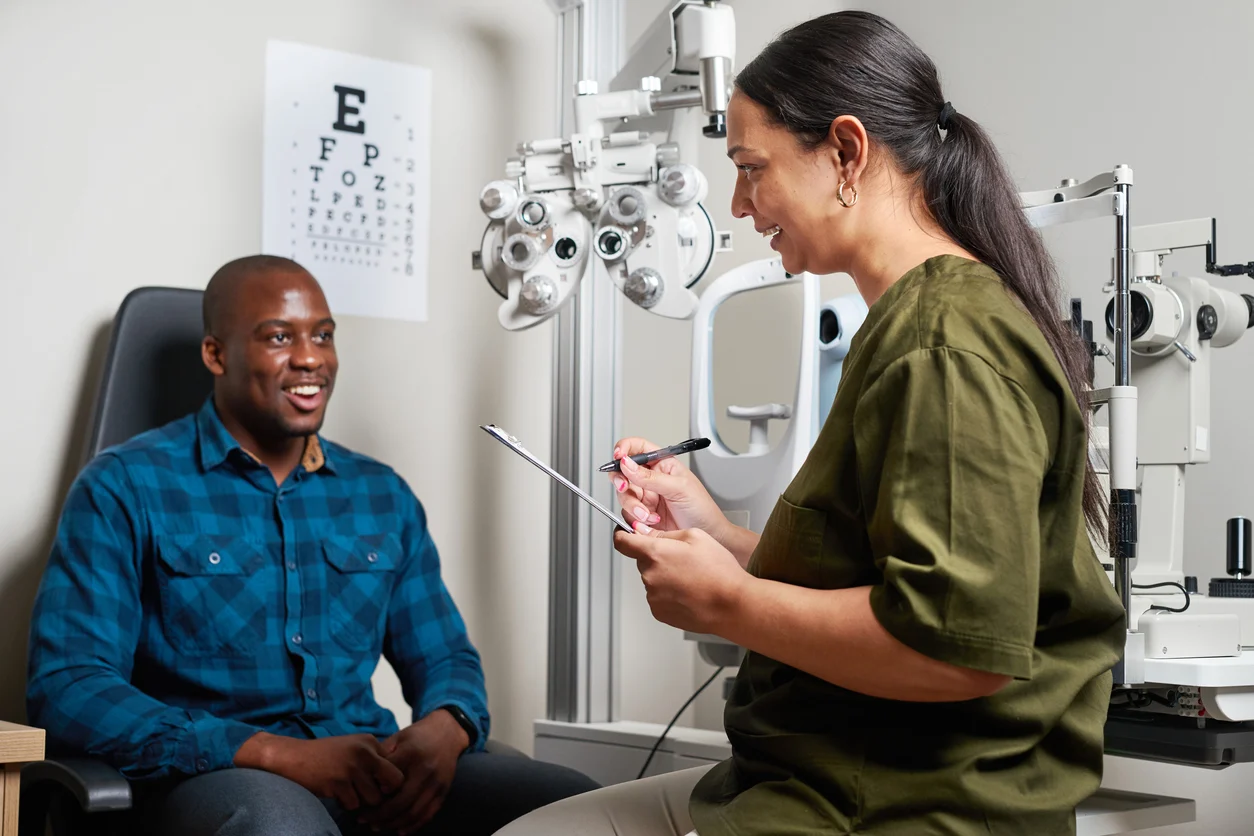
Your Google Business Profile is important. But if you believe choosing the right categories, collecting five-star reviews and filling out your profile are enough to secure a place in Google’s Top 3 Map Pack, you may be overlooking an important part of your local SEO strategy.
Local SEO for independent eye care practices needs to go beyond the Google Business Profile.
Your website must also help search engines understand your practice, the services you provide, the doctors who provide them and the locations where patients can find you.
Consider two independent optometry practices competing in the same city. Both have strong reviews, complete Google Business Profiles, and established reputations. Yet one appears more prominently for a specialist service such as Dry Eye IPL or Myopia Management.
The difference may involve several factors, including proximity, relevance, prominence, website content, and the strength of each practice’s online presence.
You cannot control every ranking factor.
However, you can improve the signals your website sends to search engines. For independent practices, this creates an opportunity to build a more complete local search strategy, one that connects your clinical expertise with the patients looking for it.
Why Standard Google Business Profile Optimisation Isn’t Enough
Your Google Business Profile is often the first place to start with Local SEO. It tells Google important information about your practice, including your name, address, phone number, opening hours, and the services you provide.
Keeping that information accurate and complete matters. So do genuine patient reviews and a well-maintained profile.
However, these steps are only part of the full picture.
According to Davide Volante, a Patient Journey Manager at Samsara Vision Inc. and a MedTech/Healthcare professional with extensive experience in patient pathway development across the eye care journey, “Good local SEO in eye care should not simply bring more patients to a practice. It should help the right patient reach the right professional, with clearer expectations and less friction in the care pathway.”
He added that:
“In eye care, the patient pathway can involve optometry, ophthalmology, retinal specialists, surgery, low vision services and follow-up care. A strong local visibility therefore has more value when the website clearly explains which conditions are managed, which services are available, who provides the care, how appointments or referrals work, and what the next step may be.
I would also be careful with reviews. They are important for trust and local visibility, but they often reflect communication, accessibility and patient experience more than clinical quality itself.”
Google says local search results are primarily influenced by three factors: relevance, distance, and prominence.
Relevance concerns how well your practice matches the search. Distance considers how far away your practice is from the person searching. Prominence reflects how well-known your practice is, informed by factors that include reviews and links from other websites. These factors help explain why a practice with excellent reviews may still struggle to appear in the Map Pack for a particular specialty service.
Proximity isn’t something you can optimise away
Imagine your practice is in Cary, North Carolina. A patient searching for an eye doctor near downtown Cary may see different local results from someone searching several miles away.
Your website cannot eliminate this distance factor, and no agency can guarantee a Top 3 position across an entire city.
What your website can do is strengthen other aspects of your local search presence by clearly communicating your services, practitioners and location.
Your website needs to support your Google Business Profile
Your Google Business Profile tells part of your story. Your website needs to complete it.
Suppose you offer Myopia Management, Scleral Lens Fitting and Dry Eye IPL, but your website provides little detail about these services or how patients can access them.
Google may have less useful information to assess the relevance of your website for those searches. Dedicated service pages, clear practitioner profiles, descriptive internal links and accurate business information give search engines more context about your practice.
Key Technical Ranking Factors in Local SEO for Independent Eye Care Practices
A strong local search strategy connects your Google Business Profile with a website that is accessible, well organised and clear about the care your practice provides.
Here are three areas worth examining.
1. Structured Data and Medical Business Information
In our experience, simply having a Google Business Profile and a few service pages is no longer enough. The practices that consistently move into or hold Map Pack positions for specialty terms are the ones that make the relationships between the treating doctor, the specific service, and the practice location unmistakable—both to patients and to search systems. When those connections are weak or missing, even strong clinical reputations struggle to translate into visibility.
Structured data is a way of labelling information on your website so search engines can interpret it more consistently. For an independent eye care practice, relevant structured data may describe the business, its location, contact details and individual practitioners. The appropriate schema types depend on the information being represented.

For example, LocalBusiness structured data can help Google interpret business details such as an address and opening hours.
But adding schema is not a shortcut to higher rankings. It does not guarantee that Google will display enhanced search results or award your practice a stronger position in the Map Pack.
The value comes from implementing accurate markup that reflects the information patients can actually see on your website.
Consider a practice with three optometrists and several specialist services. If the website clearly identifies each practitioner, explains their areas of expertise and provides accurate location information, it gives visitors and search engines a more coherent picture of the practice.
Structured data can support that picture, rather than replace it.
2. Internal Links and Descriptive Anchor Text
Internal links connect one page on your website to another. They help visitors navigate your practice’s services and help search engines discover pages and understand their context.
The words used in those links matter, too.
Consider the difference between these examples:
- Generic: “Click here to learn more.”
- Descriptive: “Learn more about our Myopia Management services.”
The second link tells the reader what to expect before clicking. It also gives Google more context about the destination page. Google recommends using concise, descriptive and relevant anchor text for internal links.
For your practice, this means connecting relevant pages naturally.
Your Myopia Management page might link to the profile of the optometrist who provides the service. That practitioner’s profile could link back to the Myopia Management page, giving patients a clear route between the service and the person delivering it.
You can apply the same approach to Dry Eye IPL and Scleral Lens Fitting.
These connections do not guarantee rankings. They make your website easier to navigate and help search engines understand the relationships between its pages.
3. Dedicated Service Pages and Website Structure
Every specialty service you want patients to find should have a clear place in your website structure, useful content and relevant internal links. Your website should make it easy for patients to find information about the specialist care you provide.
If Myopia Management is a service you want to grow, a dedicated page can explain who the service is for, what patients can expect, which practitioner provides it and how to arrange an appointment.
The same applies to Scleral Lens Fitting and Dry Eye IPL.
A single-page listing of every service may be convenient, but it might not answer the specific questions patients have when researching a particular treatment. Dedicated pages allow you to provide relevant, useful information without forcing unrelated services into the same content.
The technical foundation matters as well. Important pages should be accessible to search engines, linked from relevant parts of the website and free from avoidable crawling or indexing problems.
A sitemap can help Google discover URLs, but it does not guarantee that every page will be crawled or indexed.
Connecting Clinical Expertise to Stronger Local Search Visibility
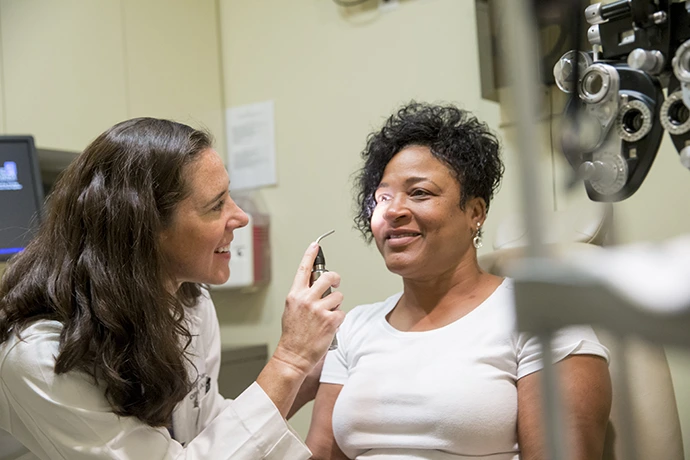
Independent eye care practices often have something valuable that larger competitors cannot simply replicate: established patient relationships, experienced clinicians and specialist knowledge built over years of practice.
The challenge is making that expertise easy to discover online.
Patients don’t always search for a general optometrist. They may search for a specific service because they already know what they need, have received a referral or are researching treatment options.
Examples include:
- “Dry Eye IPL in Cary, NC”
- “Scleral lens fitting near me”
- “Myopia management for children in Chattanooga”
These searches allow your practice to demonstrate its relevance to a specific patient need.
To make the most of that opportunity, your website should clearly explain the service, identify the practitioners who provide it, communicate where the service is available and make the next step obvious.
Your Google Business Profile should also accurately reflect your practice and its services where the available profile features allow. This is where technical SEO and Local SEO work together.
Your local presence helps Google understand your business and its relevance to nearby searches.
Your website provides additional information about your expertise, services and practitioners.
Neither guarantees a Top 3 Map Pack position, but both deserve attention if you want to compete effectively for valuable local searches.
Claim Your Practice’s Local Search Advantage
Your Google Business Profile matters. Your reviews matter. But your website should not be an afterthought in your local search strategy.
If your practice has a strong clinical reputation but struggles to gain visibility for the specialist services you want to grow, it is worth examining the full picture.
Are your important service pages accessible to Google?
Do your doctor profiles clearly explain their areas of expertise? Are relevant pages connected through useful internal links?
Does your website communicate accurate information about your practice and location?
These are the kinds of questions a focused technical and local SEO review can help answer.
At LindsayWhispers SEO, we work exclusively with independent eye care practices to identify website issues, improve how search engines understand their services and strengthen their local search foundations.
Start with a Practice Entity Diagnosis.
Book a 20-minute Practice Entity Diagnosis to discuss your practice’s current visibility, identify potential areas for improvement and determine whether a more comprehensive audit would be worthwhile.
Your clinical expertise is already there. Let’s make sure your online presence reflects it.